
It’s not just about how much carbohydrate you take in—it’s about how your body absorbs it over time. At FKT, we’re engineering smarter delivery systems that works with your physiology, not against it.
tHe Science behind FKT
1: THe Background
Why carbohydrates matter for endurance performance.
During endurance exercise, the body relies on two key fuel sources for energy: fat and carbohydrate.
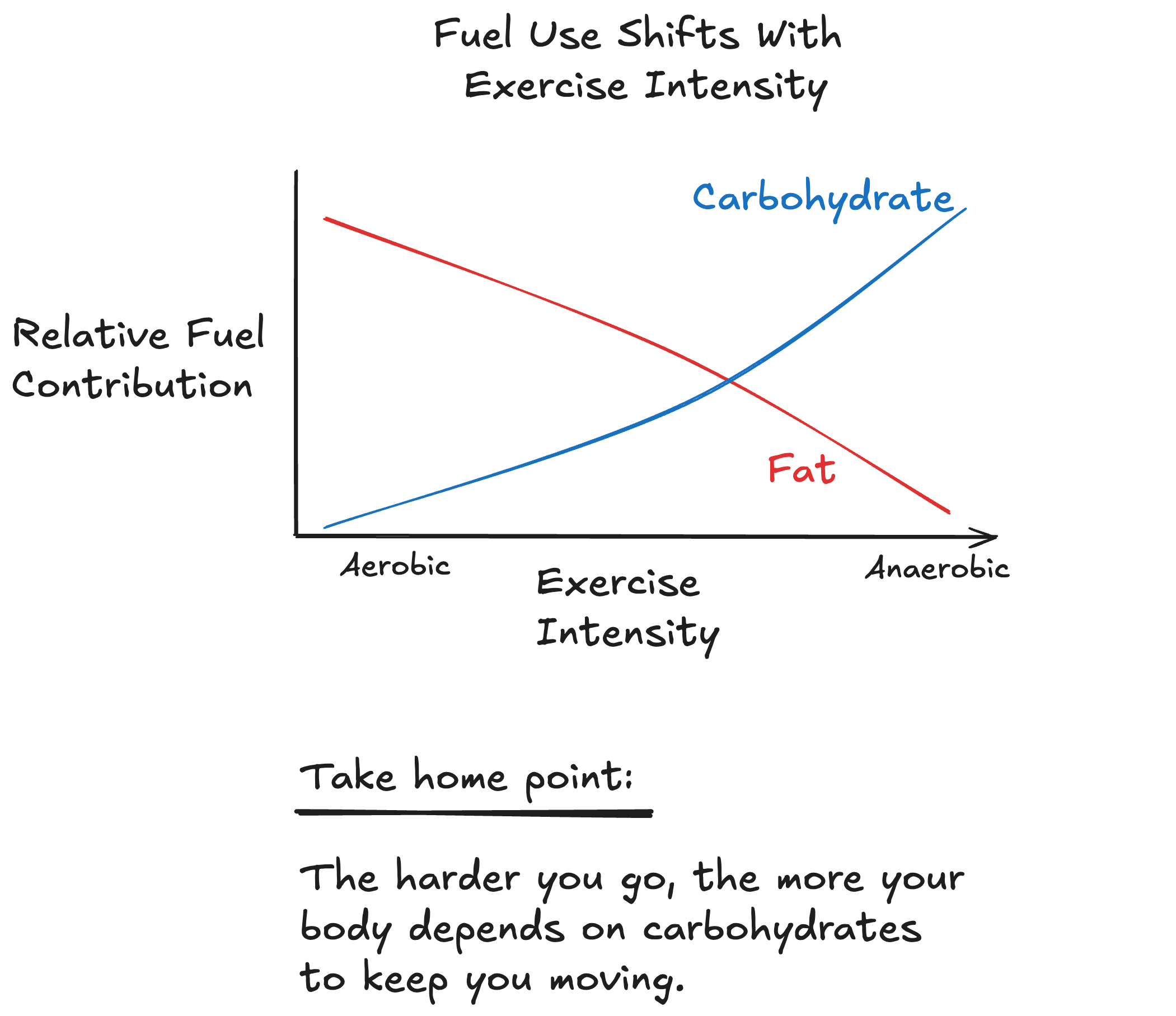
At lower intensities, the body primarily burns fat—but it’s slow. As intensity increases, the body shifts to carbohydrate metabolism to keep up, drawing from glycogen stored in muscles and the liver to deliver energy quickly.
The problem? Glycogen stores are limited. Most athletes deplete them within 60–90 minutes of moderate- to high-intensity effort. When that happens, performance drops. Fast. You know this as “bonking” or “hitting the wall”—a crash in energy, power, and focus.
To avoid this, sport nutrition guidelines recommend athletes consume 30–90 grams of carbohydrate per hour during long events. Higher intake is linked to better performance and faster finish times.
if you want to go fast and far, carbs are king.
What all current products have in common
During endurance exercise, the body relies on two key fuel sources for energy: fat and carbohydrate.
At lower intensities, the body primarily burns fat—but it’s slow. As intensity increases, the body shifts to carbohydrate metabolism to keep up, drawing from glycogen stored in muscles and the liver to deliver energy quickly.
The problem? Glycogen stores are limited. Most athletes deplete them within 60–90 minutes of moderate- to high-intensity effort. When that happens, performance drops. Fast. You know this as “bonking” or “hitting the wall”—a crash in energy, power, and focus.
To avoid this, sport nutrition guidelines recommend athletes consume 30–90 grams of carbohydrate per hour during long events. Higher intake is linked to better performance and faster finish times.
if you want to go fast and far, carbs are king.
2: The problem
Why Current Fueling Strategies Fall Short.
Most endurance fuels are designed to be consumed every 15–30 minutes. Endurance products typically deliver 20–30 grams of simple carbohydrates per serving (like glucose, fructose, or maltodextrin), which aligns with how quickly the gut can absorb sugar: about 1 to 1.5 grams per minute.
To maintain stable blood sugar and performance, athletes have to take in carbs constantly. Miss a window, and you risk the dreaded energy crash.
But trying to take in large doses all at once doesn’t work either. The gut can’t handle it—unabsorbed carbs stay in the intestine, pulling in water and increasing the risk of bloating, cramping, and diarrhea.
Why not just eat a gel every 20-30 minutes?
That works in theory—but in practice, it’s frustrating, uncomfortable, and often impractical. It breaks focus, disrupts rhythm, and overwhelms the gut—especially during long efforts. Not to mention that NOBODY likes gels. One athlete we interviewed described fueling this way:

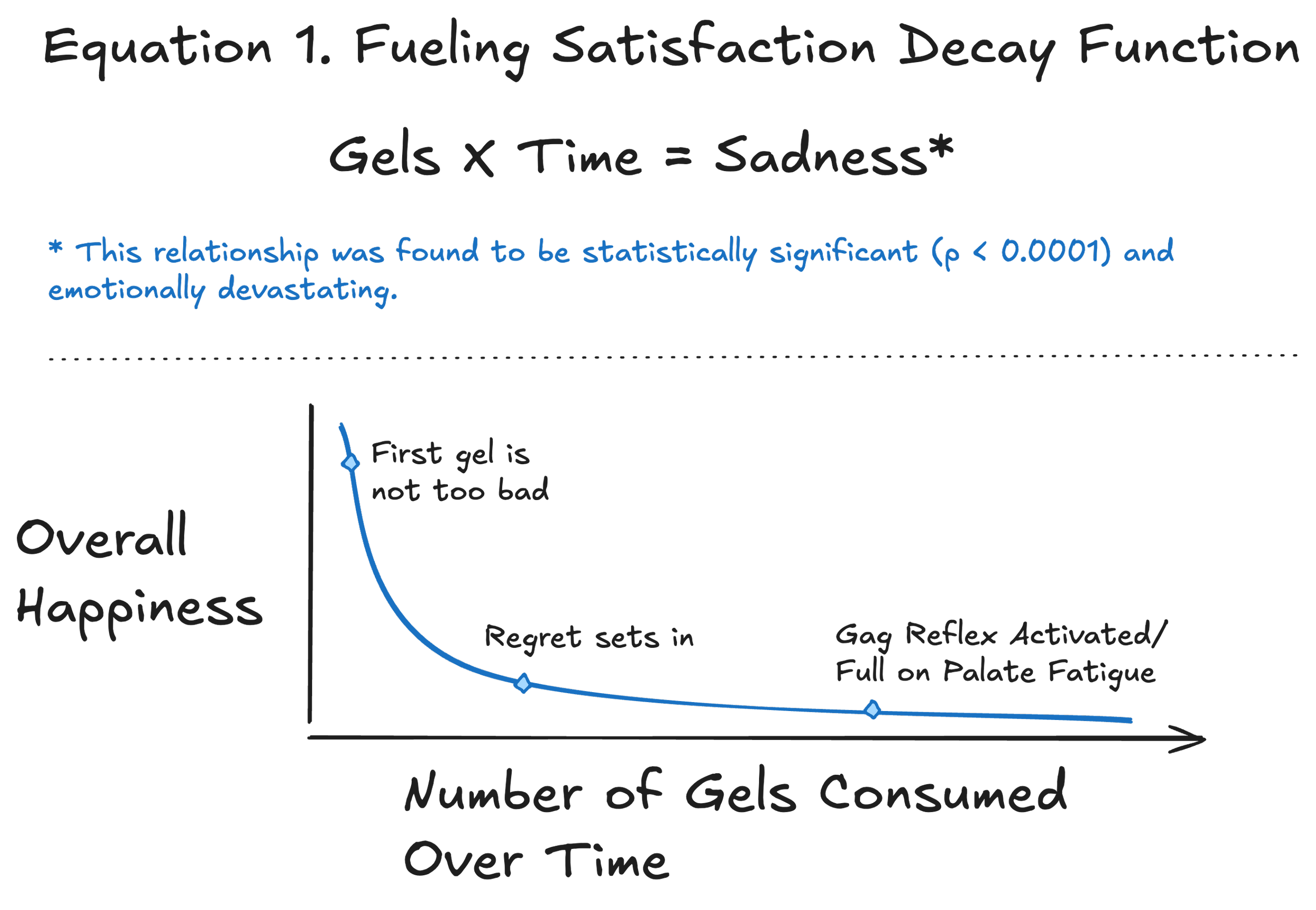
Fueling every 20 minutes with a product you don’t like is not a strategy—its a compromise.
3: The SOlUTION
Rethinking Fueling from the Gut Up
Endurance athletes don’t need more carbohydrate—they need it delivered in a way the body can actually handle.
During long or intense efforts, the gut takes a beating. Reduced blood flow, dehydration, repetitive impact, and concentrated sugars can all trigger exercise-induced gastrointestinal syndrome (EIGS)—a condition that has affected up to 90% of athletes in some events and is a leading cause of race withdrawals.
As symptoms worsen, many athletes stop fueling altogether. Energy crashes follow. Performance collapses. It’s a physiological dead end.
We believe there’s a better way.
A smarter fueling strategy
In July 2025, FKT submitted a Small Business Innovation Research (SBIR) proposal to the National Science Foundation focused on solving this exact problem. We can’t share all the details of the proposal yet, but our work is grounded in: